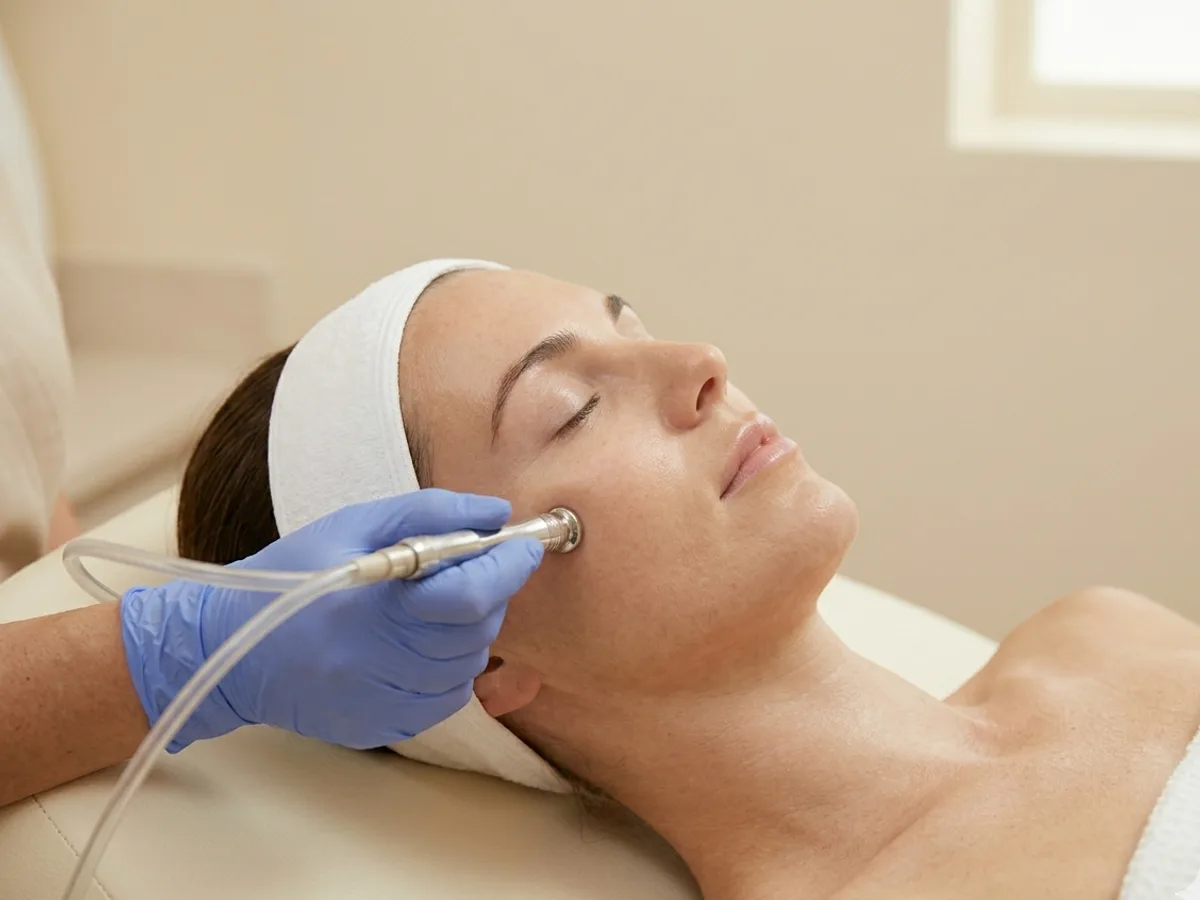
Most people know microdermabrasion "exfoliates" — but what does that mean at a cellular level? A clinical breakdown of how crystal exfoliation triggers your skin's repair cascade.
La microdermoabrasión es uno de los tratamientos profesionales para la piel más ofrecidos en el mundo, y sin embargo la mayoría de las personas que reservan uno solo tienen una idea vaga de lo que realmente hace. Saben que implica exfoliación. Saben que su piel se siente más suave después. Pero los cambios fisiológicos específicos que ocurren en cada capa de la piel durante y después del procedimiento rara vez se explican en detalle. En 360 Radiance, en Sunrise, Florida, creo que los clientes informados obtienen mejores resultados porque comprenden el proceso, se comprometen con la frecuencia recomendada y siguen el cuidado posterior adecuado. En este artículo voy a desglosar exactamente lo que sucede en su piel durante un tratamiento de microdermoabrasión, capa por capa.
El Estrato Córneo: Donde Todo Comienza
La capa más externa de su piel es el estrato córneo, una barrera de 10 a 30 células de grosor compuesta por queratinocitos muertos y aplanados, unidos por una matriz lipídica. Esta capa cumple una función protectora esencial, pero también acumula un exceso de células muertas, residuos ambientales, productos de oxidación del sebo y depósitos desiguales de melanina que contribuyen a la opacidad, la textura áspera, la apariencia de poros dilatados y el tono desigual.
La microdermoabrasión elimina mecánicamente las capas superficiales del estrato córneo de manera controlada y uniforme. No es lo mismo que frotar con un limpiador facial o utilizar un exfoliante químico. La eliminación es precisa, uniforme y calibrada al grosor y la sensibilidad de su piel. Al eliminar esta acumulación, el tratamiento revela inmediatamente las células más frescas y de pigmentación más uniforme que se encuentran debajo, y elimina las irregularidades microscópicas de la superficie que dispersan la luz y hacen que la piel se vea apagada.
Punta de Cristal vs. Punta de Diamante: Dos Enfoques de Resurfacing
Existen dos tecnologías principales de microdermoabrasión. La microdermoabrasión con cristales utiliza un chorro presurizado de cristales de óxido de aluminio o bicarbonato de sodio que se proyecta sobre la superficie de la piel y se aspira simultáneamente junto con las células muertas desprendidas. La microdermoabrasión con punta de diamante emplea un cabezal con una punta natural o sintética recubierta de diamante que abrasiona directamente la superficie de la piel mientras una succión al vacío retira los residuos.
Ambos métodos logran una eliminación eficaz del estrato córneo, pero difieren en precisión y versatilidad. Los sistemas de punta de diamante permiten al profesional controlar la presión, la velocidad y el número de pasadas sobre cada zona con mayor granularidad. Esto resulta especialmente ventajoso para tratar áreas delicadas alrededor de los ojos, la nariz y la boca, y para ajustar la intensidad en distintas zonas del rostro donde varía el grosor de la piel. En 360 Radiance prefiero el enfoque con punta de diamante por esta razón. Me permite personalizar el tratamiento en tiempo real en función de lo que observo a medida que trabajo cada área de su piel.
La Cascada del Colágeno: Lo Que Sucede Bajo la Superficie
Los beneficios de la microdermoabrasión se extienden mucho más allá del estrato córneo. Cuando la capa superficial es alterada mecánicamente, la piel interpreta esto como una microlesión controlada. Esto desencadena una cascada de cicatrización que comienza en la epidermis y se extiende a la dermis superior. Los fibroblastos, las células responsables de producir colágeno y elastina, aumentan su actividad en respuesta a las moléculas de señalización liberadas durante esta cascada.
Un estudio de 2006 publicado en los Archives of Dermatology demostró que una serie de tratamientos de microdermoabrasión incrementaba la densidad de colágeno dérmico de manera medible en el análisis histológico. El nuevo colágeno producido es colágeno de tipo III, que gradualmente se convierte en el más resistente colágeno de tipo I durante las semanas siguientes. Por eso, la mejora más significativa en líneas finas, firmeza y calidad general de la piel no aparece inmediatamente después del tratamiento, sino en las semanas y meses posteriores a una serie consistente.
Flujo Sanguíneo y Renovación Celular
El componente de succión al vacío de la microdermoabrasión cumple múltiples funciones más allá de la eliminación de residuos. La presión negativa estimula el flujo sanguíneo hacia el área tratada, aumentando el aporte de oxígeno y nutrientes a las células de la capa basal, que están dividiéndose activamente para reemplazar las células superficiales eliminadas. Esta circulación mejorada también acelera la eliminación de los productos de desecho celular y favorece el drenaje linfático, lo que puede reducir la hinchazón y mejorar la vitalidad general de la piel.
El aumento en la renovación celular desencadenado por la microdermoabrasión significa que la superficie de la piel se renueva de manera más eficiente en las semanas posteriores al tratamiento. Los clientes a menudo notan que el tono de su piel sigue mejorando entre sesiones a medida que el ciclo acelerado de renovación lleva células más frescas y de pigmentación más uniforme a la superficie.
Absorción de Productos: Hasta un 50 Por Ciento Más Eficaz
Uno de los beneficios clínicamente más significativos de la microdermoabrasión es el aumento dramático en la absorción transdérmica de productos. La investigación ha demostrado que eliminar las capas más externas del estrato córneo puede incrementar la penetración de los productos tópicos hasta en un 50 por ciento. Esto se debe a que el estrato córneo es la principal barrera para la absorción de ingredientes. Cuando se adelgaza de manera controlada, los ingredientes activos como la vitamina C, el ácido hialurónico, los péptidos y los factores de crecimiento alcanzan las células vivas de la epidermis con mucha mayor eficacia.
En 360 Radiance aprovecho plenamente esta ventana de absorción aplicando sueros específicos, incluidas nuestras formulaciones europeas en ampolla de vidrio, inmediatamente después de la microdermoabrasión. La combinación de un resurfacing mecánico seguido de ingredientes activos en alta concentración entregados directamente a una piel altamente receptiva produce resultados que ninguno de los dos tratamientos por sí solo podría lograr.
Quién se Beneficia Más y Con Qué Frecuencia Programarlo
La microdermoabrasión es adecuada para la mayoría de los tipos y preocupaciones cutáneas, incluyendo opacidad, textura áspera, hiperpigmentación superficial, cicatrices leves de acné, poros dilatados, líneas finas y tono desigual. Es uno de los pocos tratamientos profesionales que no requiere tiempo de recuperación, lo que lo hace ideal para clientes que necesitan una mejora visible sin interrupción social.
Para obtener resultados óptimos, recomiendo una serie de seis tratamientos espaciados de dos a cuatro semanas, seguidos de sesiones de mantenimiento mensuales. El efecto acumulativo de construcción de colágeno de una serie consistente produce resultados significativamente mejores que los tratamientos aislados. Durante su consulta en 360 Radiance, evalúo su piel y le recomiendo una frecuencia específica en función del grosor, la sensibilidad y los objetivos de su piel.
Qué Esperar Durante y Después del Tratamiento
Durante el tratamiento sentirá una leve sensación de raspado, similar a un papel de lija, combinada con la suave tracción de la succión al vacío. La mayoría de los clientes lo describen como cómodo e incluso relajante. El tratamiento dura aproximadamente entre 30 y 45 minutos para todo el rostro. Inmediatamente después, su piel puede aparecer ligeramente rosada, similar a una leve quemadura por viento, lo que normalmente se resuelve en una o dos horas.
En los días posteriores al tratamiento, su piel se sentirá notablemente más suave y se verá más luminosa. Puede experimentar una leve sequedad a medida que la piel se adapta a la velocidad acelerada de renovación. Utilizar una crema hidratante suave y evitar la exposición directa al sol con una aplicación diligente de protector solar es esencial durante este período. Proporciono a cada cliente instrucciones específicas de cuidado posterior adaptadas a su tipo de piel.
Por Qué Mi Enfoque en 360 Radiance Es Minucioso
No todos los tratamientos de microdermoabrasión son iguales. Muchos spas y clínicas ofrecen una pasada rápida y superficial que aborda las células muertas más superficiales pero pierde todo el potencial del tratamiento. Mi enfoque en 360 Radiance es metódico. Realizo varias pasadas sobre cada zona, ajustando la intensidad de la succión y la abrasividad del diamante según el área y la respuesta de su piel. Presto especial atención a las áreas de congestión, hiperpigmentación e irregularidad de textura, dedicándoles atención adicional en lugar de tratar todo el rostro de manera idéntica.
Esta atención al detalle es lo que distingue una microdermoabrasión mediocre de una que ofrece resultados visibles y duraderos. En 360 Radiance, en Sunrise, Florida, yo, Marta Nazzar, trato cada sesión como una oportunidad para acercar su piel a su mejor estado posible. Reserve hoy su cita de microdermoabrasión y experimente la diferencia que marca un enfoque clínico y minucioso.
Experimente la microdermoabrasión más completa del sur de la Florida. Reserve su tratamiento con Marta en 360 Radiance.
Reservar Consulta→