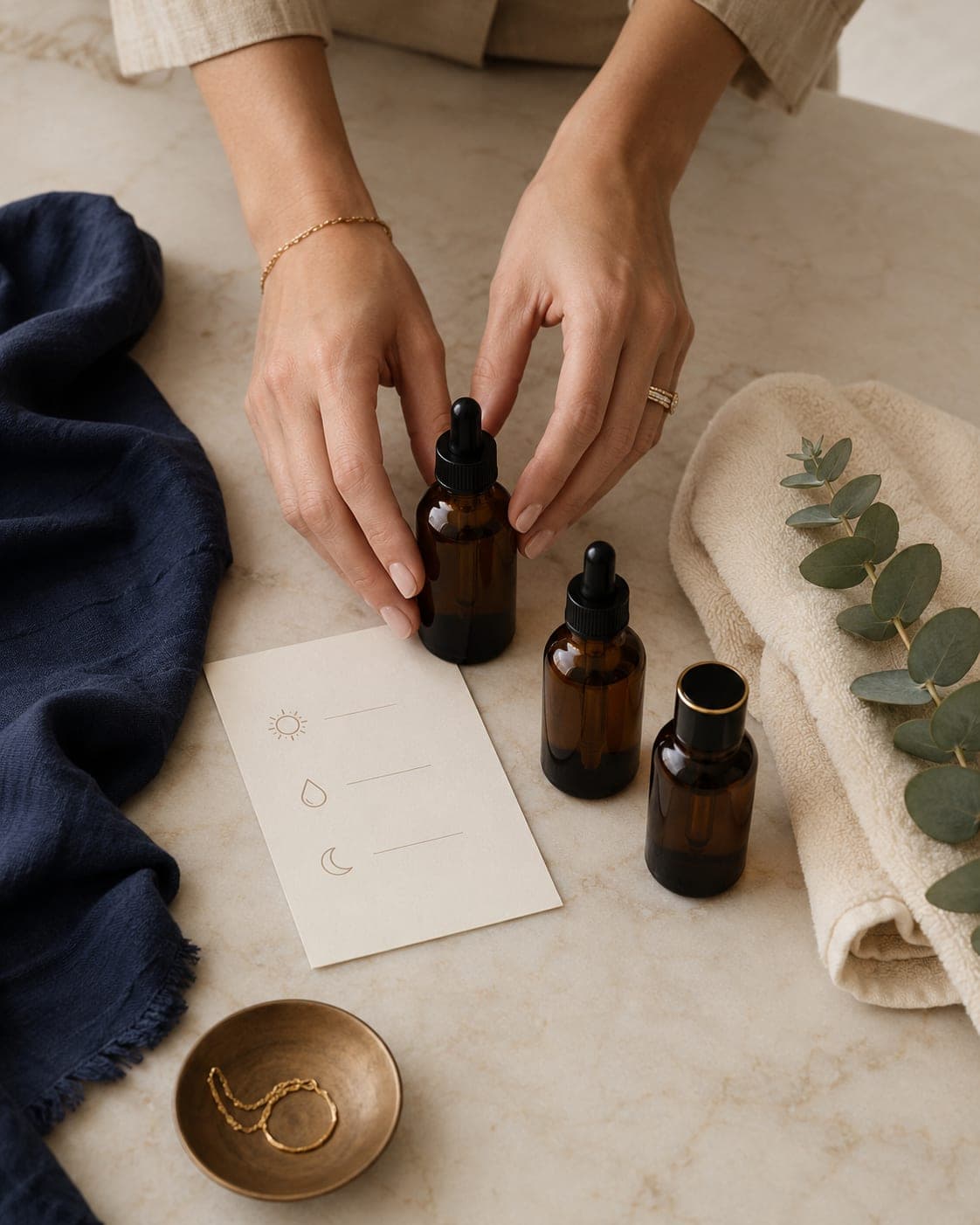
Cleanser, toner, serum, moisturizer, SPF — but the order, wait times, and layering technique matter as much as the products themselves. A step-by-step guide from our clinic.
Una rutina matinal de cuidado de la piel no es una sugerencia. Es una inversión innegociable en la salud, claridad y resiliencia a largo plazo de su piel. Sin embargo, la mayoría de las clientas que llegan a 360 Radiance están omitiendo pasos, aplicando productos en el orden incorrecto o usando combinaciones que se anulan entre sí. La ciencia de la aplicación por capas es sencilla una vez que se comprenden los principios, y hacerlo correctamente puede marcar la diferencia entre una rutina que transforma su piel y una que desperdicia su dinero. Aquí le explico exactamente cómo construir una rutina matinal que funcione, paso a paso, con el razonamiento detrás de cada elección.
Por Qué Importa el Orden de los Productos: Peso Molecular y pH
La regla fundamental de la aplicación por capas en el cuidado de la piel es aplicar los productos desde la consistencia más ligera hasta la más espesa, lo que generalmente corresponde al peso molecular más bajo hasta el más alto. Los sueros a base de agua con moléculas pequeñas penetran mejor en la piel cuando se aplican sobre una piel limpia y ligeramente húmeda, sin nada que bloquee su camino. Las cremas y aceites más pesados forman una capa oclusiva que sella los productos más ligeros que están debajo. Si invierte este orden, aplicando una crema pesada antes de un suero, las moléculas más grandes de la crema crean una barrera física que impide que el suero llegue a la piel de manera efectiva.
El pH también desempeña un papel crítico. El manto ácido de su piel se sitúa aproximadamente entre un pH de 4,5 y 5,5. Ciertos ingredientes activos, particularmente la vitamina C (ácido L-ascórbico), son más efectivos a un pH inferior a 3,5. Si aplica un suero de bajo pH sobre un producto de pH alto, neutraliza el activo, reduciendo drásticamente su eficacia. La rutina que se presenta a continuación está organizada para respetar tanto el peso molecular como la secuencia de pH.
Paso 1: Limpiador
Sí, necesita limpiarse el rostro por la mañana. Durante la noche, su piel produce sebo, desprende células muertas y acumula residuos de sus productos nocturnos. Una limpieza matinal suave elimina esta acumulación y crea un lienzo limpio para sus activos. Para pieles grasas o propensas al acné, un limpiador en gel o espuma con un tensioactivo suave elimina eficazmente el exceso de grasa sin despojar la barrera. Para pieles secas o sensibles, un limpiador en crema o leche proporciona la misma acción limpiadora con emolientes adicionales que evitan esa sensación de tirantez e incomodidad.
El Radiance Gentle Gel Cleanser está formulado a un pH de 5,2, compatible con la piel, lo que significa que limpia eficazmente sin alterar su manto ácido. Evite los limpiadores con lauril sulfato de sodio (SLS) como tensioactivo principal, ya que puede ser excesivamente decapante para el uso diario matinal. Enjuague con agua tibia, nunca caliente, ya que el calor dilata los capilares y puede agravar el enrojecimiento y la sensibilidad.
Paso 2: Tónico
Un tónico bien formulado cumple dos propósitos. En primer lugar, reequilibra el pH de su piel después de la limpieza, devolviéndolo al rango ácido óptimo donde su barrera funciona mejor. En segundo lugar, prepara la piel para absorber los productos posteriores de manera más eficiente al proporcionar una capa de hidratación que mejora la penetración de los ingredientes activos. Busque tónicos que contengan ingredientes como niacinamida, ácido hialurónico o extracto de centella asiática. Evite los tónicos con altas concentraciones de alcohol (etanol o alcohol isopropílico), que despojan los lípidos de la barrera y provocan una producción de grasa de rebote.
Aplique el tónico sobre un disco de algodón o directamente en las palmas de las manos y presiónelo suavemente sobre la piel. No frote agresivamente. La piel debe sentirse ligeramente húmeda, no empapada, antes de pasar al siguiente paso.
Paso 3: Suero de Vitamina C
La vitamina C por la mañana es uno de los pasos más respaldados por la evidencia que puede añadir a su rutina. El ácido L-ascórbico es un potente antioxidante que neutraliza los radicales libres generados por la exposición a los rayos UV y la contaminación ambiental. Un estudio publicado en 2003 en el Journal of the American Academy of Dermatology demostró que la vitamina C tópica al 15% proporcionaba una fotoprotección significativa y reducía el eritema inducido por los rayos UV cuando se aplicaba bajo el protector solar. También inhibe la tirosinasa, la enzima responsable de la producción de melanina, lo que la convierte en un ingrediente de primera línea para atenuar las manchas oscuras y prevenir nueva hiperpigmentación.
El Radiance Vitamin C Brightening Serum utiliza una fórmula estabilizada de ácido L-ascórbico al 20% a un pH de 3,2, optimizada para una máxima penetración. Aplique tres o cuatro gotas en el rostro y el cuello inmediatamente después del tónico, mientras la piel aún está ligeramente húmeda. Permita de 60 a 90 segundos para que el suero se absorba antes del siguiente paso. Esta breve espera asegura que la vitamina C de bajo pH pueda hacer su trabajo sin ser amortiguada por el siguiente producto.
Paso 4: Ácido Hialurónico
El ácido hialurónico (AH) es un humectante que atrae la humedad del ambiente y de las capas más profundas de la piel hacia la epidermis. Una sola molécula de AH puede retener hasta 1.000 veces su peso en agua. La clave para usar el AH de manera efectiva es aplicarlo sobre piel húmeda. Si lo aplica sobre piel seca en un ambiente de baja humedad, extraerá la humedad de su piel en lugar de aportarla, que es lo opuesto a lo que se desea.
Después de que la vitamina C se haya absorbido, rocíe ligeramente su rostro con agua o aplique con palmaditas una pequeña cantidad de tónico, e inmediatamente aplique su suero de ácido hialurónico. Las formulaciones de AH multipeso que contienen tanto ácido hialurónico de alto como de bajo peso molecular proporcionan, simultáneamente, un efecto rellenador en la superficie y una hidratación dérmica más profunda. El Radiance Hydra-Plump HA Serum utiliza una fórmula de tres pesos precisamente por esta razón.
Paso 5: Hidratante
La crema hidratante actúa como la capa selladora que retiene toda la hidratación y los activos que acaba de aplicar. Incluso las pieles grasas necesitan una crema hidratante. Saltarla envía una señal a sus glándulas sebáceas de que la piel está deshidratada, desencadenando una producción compensatoria de grasa que empeora la oleosidad. La diferencia está en la textura: la piel grasa se beneficia de una crema hidratante en gel-crema ligera, mientras que la piel seca responde mejor a una crema más rica que contenga ceramidas y ácidos grasos que refuercen la barrera lipídica.
La Radiance Daily Barrier Cream contiene ceramidas, escualano y péptidos que fortalecen la barrera cutánea a la vez que proporcionan ocho horas de hidratación. Aplique una cantidad del tamaño de una moneda pequeña y presiónela sobre la piel con movimientos suaves y ascendentes. Déjela asentar unos dos minutos antes del paso final.
Paso 6: SPF (Innegociable)
El protector solar es el producto más importante de cualquier rutina de cuidado de la piel, sea matinal o no. La radiación UV es responsable de hasta el 80% del envejecimiento cutáneo visible, según una investigación publicada en Clinical, Cosmetic and Investigational Dermatology. Degrada el colágeno, desencadena la sobreproducción de melanina y genera radicales libres que dañan el ADN. Cada ingrediente antienvejecimiento que aplique, desde el retinol hasta la vitamina C, queda anulado si omite el SPF.
Utilice un protector solar de amplio espectro con un SPF 30 como mínimo, aunque el SPF 50 es preferible para el uso diario. Aplique una cantidad equivalente a un cuarto de cucharadita solo para el rostro, lo cual es significativamente más de lo que la mayoría de las personas usa. Los protectores solares químicos necesitan unos 15 minutos para unirse a la piel antes de la exposición al sol, mientras que los protectores minerales (óxido de zinc, dióxido de titanio) brindan protección inmediata. El Radiance Sheer Shield SPF 50 es una fórmula híbrida que proporciona una protección de amplio espectro cosméticamente elegante sin el residuo blanquecino que disuade a muchas personas de un uso constante.
Errores Comunes Que Evitar
Los errores más frecuentes que veo son usar demasiados activos en una sola rutina matinal, aplicar los productos en el orden incorrecto y no respetar tiempos de espera adecuados. Su rutina matinal debe centrarse en la protección y la hidratación, no en un tratamiento agresivo. Reserve los ácidos exfoliantes, el retinol y los tratamientos intensivos para su rutina nocturna. Mezclar vitamina C con niacinamida es seguro, a pesar del mito en internet que dice lo contrario, pero combinar vitamina C con AHA o BHA en la misma rutina puede causar irritación y reducir la eficacia de ambos.
Obtenga el Diseño de Su Régimen Personalizado
Una rutina solo funciona si está construida para su tipo de piel, sus preocupaciones y su estilo de vida específicos. En 360 Radiance, en Sunrise, Florida, ofrezco consultas de Diseño de Régimen Personalizado en las que analizo su piel, evalúo sus productos actuales y construyo una rutina matinal y nocturna optimizada para sus objetivos. Ya sea que necesite simplificar una rutina abrumadora o construir una desde cero, un plan personalizado garantiza que cada producto que aplique trabaje a su favor, no en su contra. Reserve su consulta de Diseño de Régimen Personalizado conmigo, Marta Nazzar, en 360 Radiance y comience sus mañanas con confianza.
Deje de adivinar. Obtenga un Diseño de Régimen Personalizado de Marta y aprenda exactamente qué productos usar, en qué orden y por qué.
Reservar Consulta→